Latest News
Nanayakkara invokes Mark Fernando episode in defence of judicial reforms
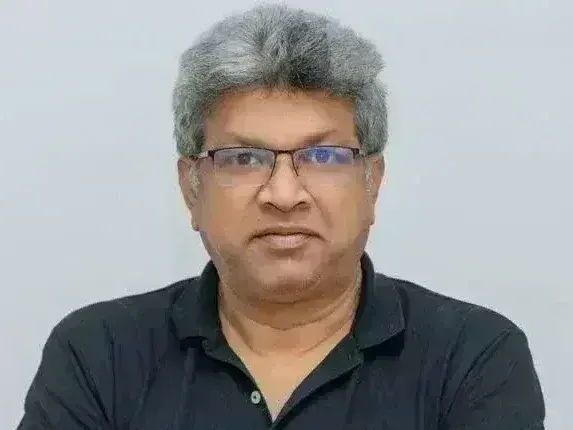
Justice Minister Harshana Nanayakkara on Thursday accused former justice minister G. L. Peiris of inconsistency in criticising the government’s judicial reforms, pointing to the 1999 decision to appoint Sarath N. Silva as Chief Justice over Justice Mark Fernando, who was then the senior Supreme Court judge.
Speaking in Parliament during the debate on amendments dealing with judges’ retirement ages and the expansion of the judiciary, Nanayakkara said Peiris was now claiming that the government’s proposals threatened judicial independence.
He said Peiris had taken a different position when he served as justice minister under President Chandrika Kumaratunga.
When Chief Justice G. P. S. de Silva retired in 1999, Fernando was the senior Supreme Court judge, but then Attorney-General Sarath N. Silva was appointed Chief Justice. Contemporary accounts identify Fernando as the senior judge who was passed over for the position.
Nanayakkara described Fernando as one of Sri Lanka’s most distinguished judges and said his judgments had made an important contribution to the development and interpretation of the law.
He also referred to remarks attributed to Peiris at the time, arguing that the judiciary was acting contrary to the mandate received by the People’s Alliance government in 1994 and that judges appointed during the previous 17 years of United National Party rule were obstructing the government’s programme. A recent account of the 1999 controversy records Peiris making that argument.
Nanayakkara said appointing judges according to whether they were considered supportive of a government’s programme was a far more direct interference with judicial independence.
He rejected criticism that the government’s current proposals would undermine the independence of the courts, saying the amendments formed part of a wider effort to speed up the administration of justice.
The Twenty-Second Amendment to the Constitution and the Judicature Amendment Bill include provisions to extend the retirement ages of judges. The constitutional amendment was presented to Parliament on August 18.
Nanayakkara said the government was seeking to retain experienced judges while increasing the overall capacity of a court system burdened by around 1.1 million pending cases.
He said Sri Lanka had only about 19 judges for every one million people, considerably fewer than several countries he cited during his speech.
“When cases continue to accumulate, hearings inevitably get postponed,” he said, arguing that the shortage of judges had contributed significantly to lengthy delays.
The government is proposing to increase the number of High Court judges from 110 to 120 and Court of Appeal judges from 19 to 24, Nanayakkara said.
He said the increase in Court of Appeal judges could also make it possible for the court to sit outside Colombo more frequently.
At present, litigants from areas including Jaffna, Hambantota, Ampara, Badulla and Kandy often have to travel to Colombo for appeal proceedings, he said.
Nanayakkara dismissed claims that holding Court of Appeal sittings outside Colombo was a step towards federalism.
He said the Constitution already allowed the Court of Appeal to sit outside Colombo and that expanding such sittings would improve access to justice.
The minister said increasing judicial numbers was only one element of a wider reform programme begun after the government took office in 2024.
According to Nanayakkara, the government had increased the number of courtrooms by 29 during the past two years.
He said Supreme Court courtrooms had been increased from four to seven, while additional High Courts dealing with commercial and criminal matters had also been established.
Two permanent Trial-at-Bar courts had been established, while High Court rooms had been allocated specifically to hear bribery cases, he said.
A Small Claims Court had also been established to deal with smaller financial disputes.
Nanayakkara said court delays could not be addressed simply by increasing the number of judges because the efficiency of the entire justice system depended on several institutions.
Police investigations had to be completed efficiently before prosecutions could proceed, while the Attorney-General’s Department needed adequate staff to examine evidence, provide legal advice and file indictments, he said.
The government had therefore taken steps to increase Police salaries and allowances, recruit personnel and fill vacancies in institutions involved in the administration of justice.
Nanayakkara said shortages at the Government Analyst’s Department had also contributed to delays, particularly when criminal cases depended on forensic reports.
He said recruitment had been carried out on permanent and contract bases to reduce the backlog.
Delays in obtaining Government Analyst reports had contributed to overcrowding in prisons because suspects remained in custody while cases could not proceed, he said.
Nanayakkara said the government was also expanding the use of technology in the courts.
Electronic filing had already been introduced in the Supreme Court and Court of Appeal under the e-Court programme, while the Colombo Small Claims Court had also begun accepting electronic filings.
The government planned eventually to extend electronic filing and other digital systems throughout the judiciary, he said.
Nanayakkara said electronic case files reduced paperwork and costs while allowing judges to examine documents more quickly.
Voice-to-text technology had also been successfully tested, he said, with preliminary work under way to introduce the system in around 350 courts.
He said the technology could substantially reduce the time required to prepare court records.
The government had also amended criminal procedure laws to allow witnesses, under prescribed conditions, to give evidence remotely.
Nanayakkara said similar provisions should be introduced for civil cases, as court proceedings were frequently postponed when witnesses could not attend in person.
The minister also referred to legislation dealing with the recovery of proceeds of crime and measures to strengthen the Commission to Investigate Allegations of Bribery or Corruption.
He said the anti-corruption commission had been placed on a separate salary structure, given authority to recruit staff and was being expanded across the country.
Nanayakkara argued that delays in the justice system affected not only litigants but also investment and economic activity.
An investor involved in a contractual dispute would be reluctant to operate in a country where resolving the matter through the courts could take several years, he said.
The government therefore viewed judicial reform as important both for ordinary citizens and for businesses.
Nanayakkara said proposals to change judges’ retirement ages had also been discussed within the legal profession long before the present government took office.
He cited a 2016 parliamentary subcommittee report which, he said, proposed a common retirement age of 65 for judges of the superior courts and contemplated roles for retired judges in improving the skills of judges in lower courts.
He said longer life expectancy and the experience accumulated by senior judges meant the state was losing valuable expertise when judges were required to retire while still capable of serving.
The government’s proposals would not prevent judges from retiring earlier if they wished to do so, he said. Nanayakkara told Parliament that judges would retain the option of retiring with their full pension despite the revised retirement age.
He said the government was also considering measures to provide appropriate incentives for experienced judges to remain in service.
Nanayakkara rejected allegations that the amendments were designed to benefit a particular judge or allow the government greater control over the judiciary.
He said critics had presented the proposal to religious leaders, professional organisations and international bodies as though it applied selectively to superior court judges, while failing to explain that the government was proposing changes across the judiciary.
The government had also responded through the Foreign Ministry to concerns raised by the UN Special Rapporteur on the independence of judges and lawyers, he said. Nanayakkara had previously told Parliament that the government questioned whether the Special Rapporteur had received complete information about the proposals.
The Supreme Court has since determined that the Twenty-Second Amendment does not require approval at a referendum, subject to a wording change identified by the court, while the Judicature Amendment Bill was found not to be inconsistent with the Constitution.
Nanayakkara said the amendments should be judged as part of the government’s wider effort to reduce delays in the courts rather than as an isolated change to judges’ retirement ages.
The objective, he said, was to prevent people from spending years going back and forth to court and to conclude cases more quickly.
He said the programme fulfilled a commitment made in the government’s election manifesto to build a justice system based on fairness, equal protection of the law, transparency, efficiency, independence and public confidence.
RELATED NEWS
View all

Latest News
Teenage suspect arrested over Ambalangoda shooting as youth crime concerns grow
Sep 25, 2026

Latest News
New Bill seeks to eliminate rabies and regulate dog ownership in Sri Lanka
Sep 24, 2026
Latest News
Screen time rising among Sri Lankan preschool children, Health Ministry warns
Sep 24, 2026
Latest News
China to deploy meteorological early-warning system in Sri Lanka
Sep 24, 2026