Current Affairs
Historic roots of Hindu nationalist surge in Bengal
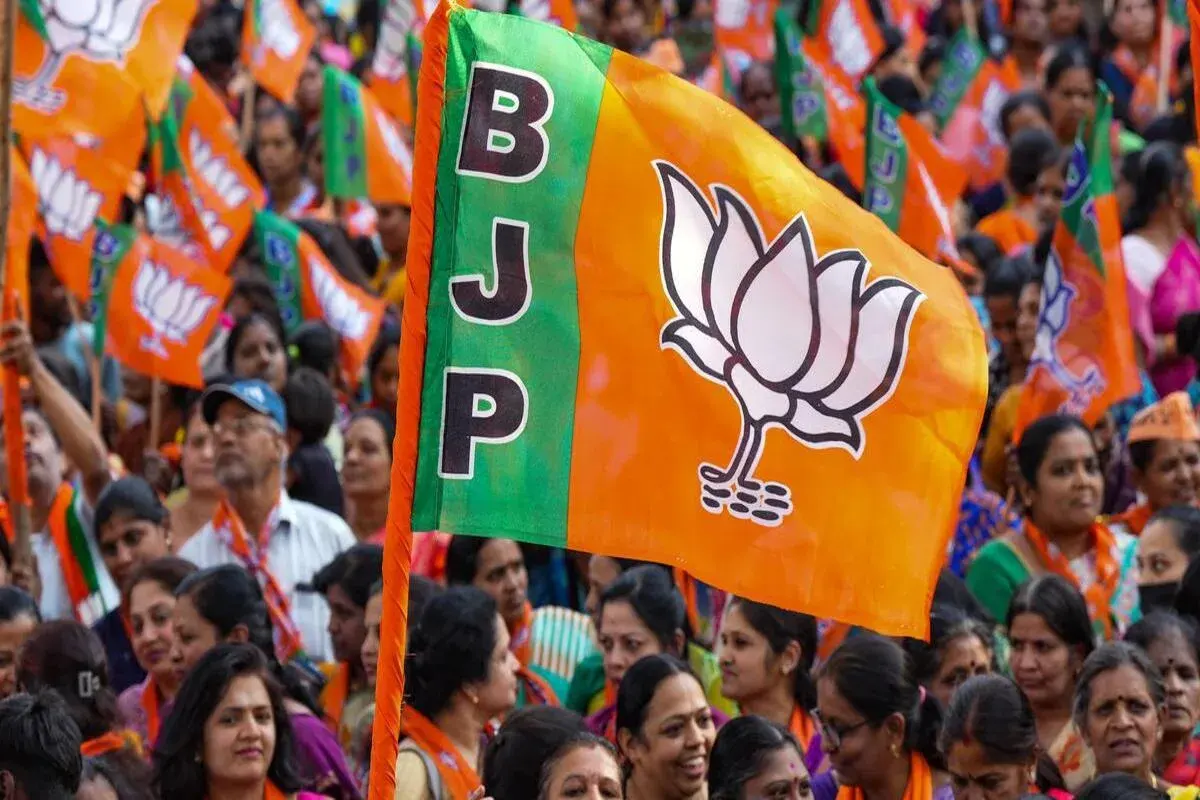
A Red State for decades is now Saffron
By P.K.Balachandran
The Eastern Indian State of West Bengal was known to be a Centre-Left/Communist stronghold for decades. But it is now as Right-Wing Hindu nationalist as it can be. Is the change a flash in the pan or has it been Hindu nationalist deep inside and did not exhibit it? A reading of Bengal’s modern political history will show that it was discernibly Hindu nationalistic in the 19 th.Century, even being a pioneer in many ways.
Historical Role of Hindutva in Bengal
Turk/Afghan Sultans ruled Bengal from the 13 th. to the 18th century. Bengali peasants, mostly those living in East Bengal, came under the spell of Islamic saints called Sufis as they were oppressed under the Hindu caste system. The arrival of the British in the 18th century.The century brought relief to the Hindus, who, until then, were oppressed by the Muslim rulers of Bengal. The British openly favoured the Hindus, stripping the Muslims of all vestiges of power.
Under the “Permanent Settlement” decreed by Governor General Lord Cornwallis, the upper caste Hindus called “Bhadralok” (gentry) became landlords cum tax collectors, acquiring social status and money. While the Muslims languished without a Western education, the high caste Hindus took full advantage of the new opportunities and further strengthened their socio-political and economic standing.
Given the elevated status, the Hindus also developed “a Hindu consciousness” which was essentially in opposition to the Muslims. In the 19 th.Century, Bakim Chandra Chatterjee’s novel “Ananda Math” and its theme song “Vande Mataram” highlighted the orthodox Hindus’ struggle against Muslims when the latter were in power. Bankim Chandra Chatterjee looked upon British rule as liberating in contrast to Muslim rule, which was humiliating. Eventually, “Vande Mataram” became the anthem of Hindu nationalism.
British rule contributed to the Hindu-Muslim binary also by promoting the Hindu Shastras (scriptures). The British used the Shastras to legitimize reforms they wanted to carry out. The upper caste Hindu practice of burning the widow on the funeral pyre of her dead husband was banned by the British by quoting the “Dharmashastra” .
Hindu-Muslim Rift
The inauguration of the decennial census in the 1880s contributed to the growing Hindu- Muslim rift. The Hindus found, to their dismay, that the Muslims were in a majority in Bengal. This led to the partition of Muslim-dominated East Bengal from the Hindu-majority West Bengal in 1906. The Hindus, led by the upper caste “Bhadralok” agitated and got the partition annulled in 1911. The term “Hindutva”, now widely used to denote Hindu nationalism, was coined in Bengal.
In his book “Carving Blocs: Communal Ideology in Early Twentieth-Century Bengal,”” Pradip Kumar Datta of Jawaharlal Nehru University, New Delhi, points out that the myth about Muslims threatening to emerge as a majority community by producing more children was spread by articles written by one U.N. Mukherjee in “The Bengalee” in June 1909.
The numerical strength of communities became even more important when the British established representative institutions for governance.
Muslims, Caste Hindus and Hindu Depressed Class
On 16 August 1932, British Prime Minister Ramsay MacDonald announced the “Communal Award” which apportioned representation among various communities and, most controversially, extended the provision of separate electorates to the Untouchables (Depressed Classes). Nationalists across the board immediately recognised this as another calculated expression of Britain's enduring policy of divide and rule. Prior to this announcement, Muslims, Sikhs, and Christians had already been recognised as minorities entitled to separate electorates. The Communal Award went a step further by declaring the Depressed Classes to be a separate minority as well, thus politically fragmenting Hindu society further.
Dr. B.R. Ambedkar, the most influential voice of the Depressed Classes, was deeply sceptical that joint electorates would truly deliver fair representation, given the social power imbalance between Caste Hindus and the Depressed Classes. However, the Congress leader, Mahatma Gandhi, who was against the Communal Award, and Dr. Ambedkar finally accepted a significantly larger number of reserved seats for the Depressed Classes. Separate electorates were abandoned. Instead, joint electorates were introduced, with all voters in a constituency participating in the final election of reserved seat candidates.
In Bengal, the Communal Award meant that Hindus, who constituted 44% of the population, were to be given only 32% of seats in the new legislature, much fewer than what the Muslims would get. This led to Hindu leaders giving a clarion call for “Hindu-revivalism.”
The Swadeshi movement led by the Congress, which called for the boycott of cheap foreign cloth, had the support of Hindus, especially the Bhadralok, but not poor peasants, especially poor Muslim peasants, who could not afford indigenous products. Upper-caste-Hindu activists used every means to arm-twist the peasantry, precipitating violence in the Bengal countryside.
Rise of Muslim Power
Under the Government of India Act of 1935, a coalition government of the Krishak Praja Party (a Muslim peasants' party) and the Muslim League came to power in Bengal in 1937. And Caste Hindus were reduced to a powerless minority in the new Legislative Assembly.
However, a few Congress leaders like Deshabandhu Chittaranjan Das struck a Hindu–Muslim pact for power sharing. But the pact did not survive Das’s death in 1925. The Krishak Praja Party came to power in 1937 with Muslim League support. This predominantly Muslim political formation grew in strength, given the alliance with the Namasudras – a Hindu Depressed Class group.
In December 1939, the radical Hindu leader, Vinayak Damodar Savarkar, launched the “Hindu Mahasabha” in Calcutta. Shyama Prasad Mukherjee, a disenchanted Congressman and a powerful speaker, took over the Hindu Mahasabha’s Bengal leadership. With generous donations and support from Calcutta’s North Indian big business and wealthy caste-Hindu Bengali landlords, the Mahasabha quickly became powerful.
Fearing defection of its traditional social base in Bengal, the Congress Party changed course and transformed its Bengal unit into a blatantly Caste-Hindu organisation defending Bhadralok interests.
Nevertheless, the Muslim League leader of Bengal, H.S.Suhrawady, and Congress leader Sarat Bose, strove for a “united Bengal”. But the Hindu Mahasabha and the Congress as an organisation did not want a Bengal in which the Hindus would be a minority.
In 1946, there were horrendous Hindu-Muslim riots called the “Great Calcutta killings” which happened under the watch of the Muslim League's H.S. Suhrawardy, who was also the Bengal provincial Prime Minister. The division into a Hindu (West) Bengal and a Muslim (East) Bengal had become inevitable by then.
Post-Partition Politics
In August 1947, East Bengal became East Pakistan and West Bengal remained with India. After the partition in 1947, most of the Bhadralok from East Bengal migrated to West Bengal. The rural Hindus came later in batches whenever there were anti-Hindu riots in East Bengal.
In India, the Hindu refugees felt discriminated against because the Congress governments of the time felt that they should have stayed on in East Bengal or should go back. It was only later that the Communist parties in Bengal took up their cause and turned them into their vote bank.
Only a section of Muslims of West Bengal migrated to East Pakistan upon partition. Those who remained were the poor who were kept poor by successive West Bengal governments (whether of the Congress or the Communist parties). Anti-Muslim sentiment remained embedded in the political arena, though it was not openly expressed.
Governments led by the Congress, the Communist parties and the Trinamool Congress refused to develop the Muslims educationally and economically. Instead, they encouraged them to stick to their obscurantist social ideas. As a result, today, anti-Muslim feelings based on myths about them dominate the minds of the Hindus of Bengal. It is this animosity that is now being exploited by the BJP to the hilt because it is the easiest way to get Hindu votes in Bengal.
END
RELATED NEWS
View all
Current Affairs
Over-centralisation is the root cause of examination chaos in India
Jul 28, 2026
Current Affairs
Why Modi bowed to the Cockroach Janata Party
Jul 26, 2026

Current Affairs
India okays sex education in schools but Sri Lanka’s plan is stalled
Jul 21, 2026
Current Affairs
Rights activist questions the wisdom of the “War on Drugs” approach to addiction in Sri Lanka
Jul 15, 2026