Current Affairs
Growth of Buddhism in China and the challenges it has faced
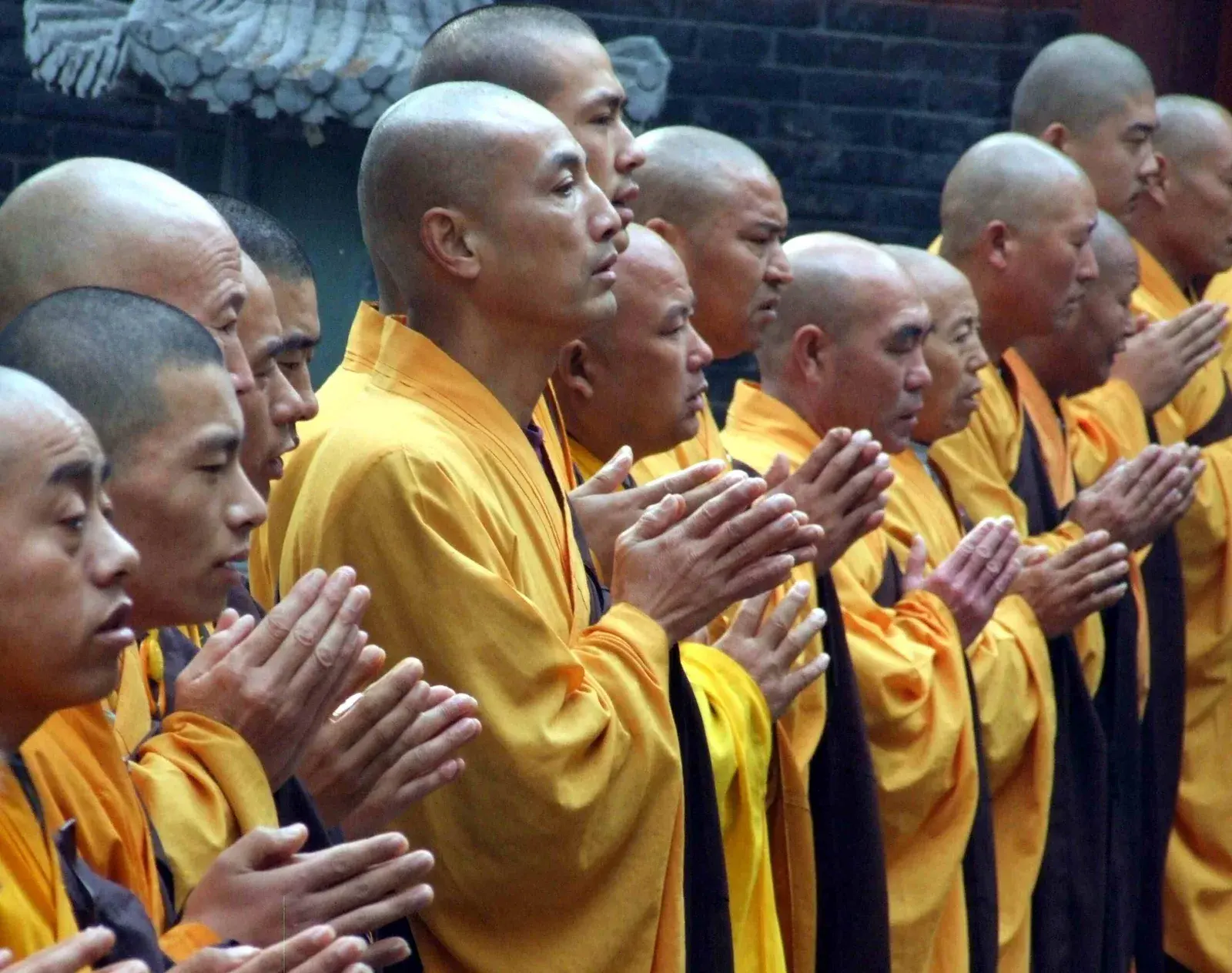
Buddhism in China has been Sinicised over the years, but has faced challenges from time to time.
By P.K.Balachandran
Colombo, May 20 - Buddhism came to China from India via Central Asia in the first century AD during the reign of Emperor Mingdi of the Han dynasty (202 BC – 220 AD). Over the centuries, it has grown in China in harmony with native belief systems like Confucianism and Taoism, despite doctrinal differences.
But Buddhists have also faced persecution and restrictions in the past, and continue to do so in some form, even now, despite the Sinification of the religion and its practices.
In 86 AD, an imperial official, Cai Yin, returned to China after spending three years in India. He came back with images of Buddha, Buddhist scriptures and two Indian Buddhist monks, one named She-mo-teng (Pali name Kasyapa Matanga) and Chu-fa-lan (probably Dharmaratna or Dharmaraksha or Dharmaranya). In 148 AD, An Shih-kao, a monk from Parthia (now in Southwestern Iran), arrived in China, set up a Buddhist temple at Loyang (in Henan Province in Central China), and began translating Buddhist scriptures into Chinese. In 166 AD, Han Emperor Huan formally adopted Buddhism by having Taoist and Buddhist ceremonies performed in his palace. Given royal patronage the Buddhist community grew in China.
In the 4th Century AD, Kumarajiva, a Buddhist from Central Asia, set up a translation bureau that produced some 98 works from many languages into Chinese, of which 52 survive. By around 514 AD, there were two million Buddhists in China.
Persecution
However, it wasn’t smooth sailing for Buddhist missionaries. They were met with scepticism, as some Buddhist doctrines contradicted indigenous Confucianism and Taoism. In 567 AD, a former Buddhist priest, Wei Yuansong, submitted a memorandum to Emperor Wu Di (561-578) of the Northern Zhou Dynasty calling for the "abolishment of Buddhism". In 574, and again in 577, Emperor Wu had Buddhist and Taoist images destroyed, and their clergy returned to lay life.
He believed the temples had become too rich and powerful, so he confiscated their land and gave it to his own soldiers. In 845, Taoist Emperor Wuzong of the Tang Dynasty initiated the "Great Anti-Buddhist Persecution" by stripping Buddhism of its financial wealth and driving "foreign" influences from China. The Emperor suspected that his subjects were taking to Buddhism to escape military service.
In 955, Emperor Shizong (r. 954-959) of the Later Zhou (951-960), due to the need for copper, ordered that Buddha statues be destroyed so that copper could be used to mint coins.
The Confucians sanctioned persecution of Buddhism, saying that it’s monastic and egalitarian philosophies destroyed the Chinese social system based on family loyalty and the duties and rights of the upper and lower classes.
However, Buddhism began to resonate among the Chinese people, particularly during times of turmoil and social upheaval. The fall of the Han Dynasty and the subsequent periods of disunity led many to seek solace and answers in Buddhism. The promise of salvation and the pursuit of “nirvana” (liberation from suffering) provided a refreshing perspective during these turbulent times.
Revival of Buddhism
Buddhism in China reached its highest point during the Sui and Tang dynasties (581-907 AD). Buddhist pilgrims went to India, and the accounts which some of them have left of their travels are valuable evidence of the state of Buddhism in Central Asia and India from the 4th to the 7th centuries. Some of the more famous Chinese pilgrims were Fa-hsien (399 to 414 AD), Xuan-zang (629-645 AD), and I-tsing (671-695 AD).
Sinicisation Ensured Acceptability
The Sinicisation that Buddhism went through over the centuries ensured the acceptability and survival of Buddhism in China. Prof. Sheng Kai, Vice President of Tsinghua University's Institute of Ethics and Religion, said that to take root and develop in China, Buddhism had to be compatible with Confucian, Taoism and Chinese ritual culture, that was accepted by the monarchy and sustained by society.
Although there were differences between the monasticism (renunciation) of Buddhism and filial piety (based on inter-generational family ties) in Confucianism, Chinese Buddhism resolved the conflicts. The Chinese strived for an integration of Buddhism, Taoism and Confucianism so that their distinctive beauties was preserved, Prof. Sheng said.
Indian Buddhism blended with different cultures and regions of China, as a result, there arose Han Buddhism, Tibetan Buddhism, and Southern Buddhism. These forms use Chinese, Tibetan, and Dai languages to propagate the Mahayana, Tantra, and Theravada Buddhism.
Cultural Integration
Buddhism introduced various symbols that hold significant cultural meaning in China. The lotus flower, for instance, symbolises purity and enlightenment, emerging pristine from muddy waters. The wheel of Dharma represents the Buddha’s teachings and the path to enlightenment.
Buddhism has significantly influenced Chinese traditions and festivals. Major Buddhist festivals, such as Vesak (Buddha’s birthday), are celebrated with rituals and ceremonies that attract large gatherings. Temples are adorned with flowers, and devotees engage in acts of charity and compassion, reflecting the core Buddhist values of kindness and generosity.
In daily life, Buddhism has shaped moral conduct and ethical considerations. Concepts like compassion (Karuna) and loving-kindness (Metta) are emphasized in familial and social relationships, promoting a culture of respect and empathy.
The integration of Buddhist concepts with existing Chinese beliefs led to the emergence of unique interpretations and practices. For instance, the Buddhist idea of “karma” and “rebirth” resonated with Taoist notions of harmony with the universe.
Schools of Chinese Buddhism
There are two schools of Chinese Buddhism - Chan or Zen Buddhism and Pure Land Buddhism. Chan Buddhism emphasises meditation as a means of attaining enlightenment. It encourages practitioners to experience reality directly rather than through intellectual understanding. “Pure Land Buddhism”, on the other hand, focuses on devotion to “Amitabha Buddha”, believing that reciting his name can lead to rebirth in the “Pure Land”, a blissful realm where enlightenment is easily attained.
Amitabha Buddha’s teachings offer practitioners a path to liberation that is accessible to everyone, regardless of their abilities or background. In a world filled with suffering and confusion, Amitabha’s presence provides comfort.
Coexistence of Buddhism and Confucianism
Despite being seen as rival philosophies, Buddhism and Confucianism have influenced each other significantly.
Buddhism focuses on the individual's spiritual journey towards enlightenment and liberation from suffering. Buddhists seek to achieve enlightenment (nirvana) and break free from the cycle of rebirth (samsara) by following the Eight-Fold Path. Buddhism encourages detachment from worldly desires and the pursuit of inner peace.
Confucianism promotes the cultivation of virtues such as filial piety, loyalty, and respect for authority. It emphasises the importance of social harmony and ethical behaviour within a hierarchical structure.
Buddhism has no concept of a deity or a creator. It recognises the existence of various deities and celestial beings but does not consider them as ultimate sources of salvation. Confucianism, being more focused on ethics and social order, does not emphasise the divine or the supernatural but acknowledges the existence of gods and ancestral spirits. However, it does not actively worship or seek guidance from them. Instead, Confucianism emphasises the importance of rituals and ceremonies to honour ancestors and maintain social harmony.
Thus, Buddhism and Confucianism serve different purposes; one promises individual liberation, and the other stresses the collective interest. Both help sustain Chinese society.
An Ambivalent Revival
According to Prof. Justin Ritzinger, in present day China, there is an ambivalence in regard to Buddhism because of Communism. In 1949, the Communist Party began to gradually, but systematically, dismantle Buddhist institutions. Monks and nuns were forced to study Communist theory, work in productive labour, and participate in political campaigns. Monasteries dwindled. Temples lost the land endowments. Across the country, Red Guards destroyed precious historical and cultural relics. Holmes Welch, the scholar of modern Chinese Buddhism declaring in 1972 that Buddhism was effectively dead.
But the new era of Reform and Openness declared by Deng Xiaoping, revived religions, including Buddhism, in 1980. But all religions still remain restricted in many ways. All religious activity is legal only within the confines of a registered religious venue and must be kept out of the public sphere.
However, in the remaining monasteries and temples, retirees, mostly women, make the circuit of devotions from hall to hall, offering incense and prostrating to the images enshrined inside. They cry “Amituofo!” in salutation to the Amitabha Buddha, the infinitely compassionate Buddha.
Monasteries might have been restored, but the lands that had once served as their endowments were not returned. Historic monasteries received some government funds for restoration, but they relied on fees for ritual services and donations from the laity to meet their day-to-day expenses.
But the entrepreneurial outreach to an increasingly wealthy and educated Chinese population, combined with tourism, has become a key driver of Buddhism’s revival in China in recent decades.
Many Chinese Buddhist organisations are also using the regime’s concept of “Chinese traditional culture” to transmit the Dharma. President Xi Jinping has made cultural nationalism a linchpin of his rule. Today, the idea of spreading Buddhism as part of Chinese culture has become central to attempts to appeal to the contemporary Chinese and a key part of China’s outreach to the world at large.
END
RELATED NEWS
View all
Current Affairs
Over-centralisation is the root cause of examination chaos in India
Jul 28, 2026

Current Affairs
Why Modi bowed to the Cockroach Janata Party
Jul 26, 2026

Current Affairs
India okays sex education in schools but Sri Lanka’s plan is stalled
Jul 21, 2026

Current Affairs
Rights activist questions the wisdom of the “War on Drugs” approach to addiction in Sri Lanka
Jul 15, 2026