Current Affairs
India’s new privacy law would chain the media, leading publishers including Ambani and Adani tell the Supreme Court
Requirement to get prior consent and compulsion to reveal source challenged
By P.K. Balachandran
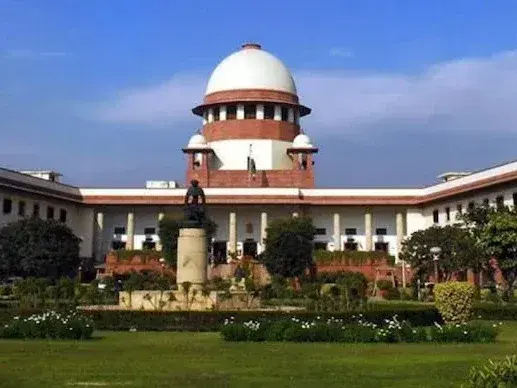
Colombo, October 27 - A group of 21 Indian news publishers, including mega companies owned by Mukesh Ambani and Gautam Adani, has challenged India's “privacy law” in the Supreme Court, pointing out that it would trample investigative journalism and let the government of India find out journalists' sources.
Reports in the Indian media say that the law would force a journalist to get “prior consent” from a person they want to investigate and force publishers to erase stories. They also say that the powers granted by the law to demand information could expose reporters' sources.
It was in 2023 that the controversial Privacy Law (the Digital Personal Data Protection Act (DPDPA) saw the light of day. It was designed to be the basis for India’s personal data regulatory regime and protection. But it stayed in the incubator for two years until its regulators and rules were made known to media publishers in September 2025. The DPDPA replaces the previous IT (Information Technology) Rules, 2011 under the IT Act 2000
Through the DPDP Act, the government imposed some compliance requirements for platforms like Meta and Google. But the publishers said in their Supreme Court filing that since media outlets were not exempt, the law was an invasion of press freedom.
Media companies received assurances in an August meeting with the government that the law would protect press freedom. But there was no written assurance for journalists as in the European Union, Singapore and Britain. The DNPA, which went to the Supreme Court said so in its confidential filing in the Court on 0ctober 6. The DNPA demands that the court quash most of the law's contentious provisions.
The law would "render investigative journalism a benign and neutered recorder of events," its 698-page filing said according to Reuters. The provisions "constitute pre-censorship which is anathema to any democracy worth its name".
The litigants include Ambani's Network18, which has seven digital news platforms, Adani's NDTV and other marquee media groups including the Indian Express and Times Internet, which is part of the Times of India group, publisher of India's largest-selling English-language daily.
Worrisome Requirement for Consent
A key concern in the privacy law is the “requirement of consent”, the group's filing says. The litigants have argued that requiring a journalist to notify the subject of an investigation and seek his or her consent "would allow that subject to destroy evidence, intimidate witnesses".
The law also lets people withdraw consent at any time and demand that their data be erased, without any public-interest safeguard, which the litigants say could force its members to unpublish or heavily redact a news report.
Fines and Blocking Access
News publishers are concerned that a Central government authority created under the said law can impose fines for non-compliance, and grants powers to the government to block access to any information in the "interests of the general public", which would curtail press freedom, the publishers said.
In an August letter to the government attached to the lawsuit, the group said India "has chosen to grant broad exemptions to the state, while failing to extend any corresponding protection to the press".
From next year, the law will also let New Delhi order any organisation handling personal data “to furnish such information as it may call for”, putting newsrooms at risk of having to divulge sources, the filing said.
If reporters cannot promise confidentiality, fewer people will come forward with information about wrongdoing. That hurts the public, not just the media. The law needs a clear exemption for journalism, written in a way that protects sources without opening a door for misuse. Until that happens, the fear that privacy rules become a tool for surveillance of the press is real.
Deterrence to Whistleblowers
The law can also deter whistleblowers from sharing information on corruption, corporate wrongdoing or electoral malpractice with reporters, the litigants pointed out. This provision must be quashed, they demanded adding that the power “can extend to privileged communications in possession of a reporter or the informant.”
What’s a particularly controversial aspect of the Privacy Act is its direct impact on the Right to Information (RTI) Act. According to RTI, citizens could seek out access to records that public authorities hold if its disclosure is in the larger interest of the public.
The challenge brings together rivals who rarely share a platform. Media companies linked to Ambani and Adani are part of the same petition as other major publishers. That unity signals how seriously the industry views the law's impact on reporting.
Declining Media Freedom
The lawsuit comes amidst accusations of declining press freedom in India since the Narendra Modi took office in 2014. Critics say many mainstream media outlets have not done enough to scrutinise Modi’s government. India's ranking in Reporters Without Borders’ World Press Freedom Index fell to 157th out of 180 countries this year, from 140th in 2014.
India has fallen further in global press freedom rankings, slipping below countries such as Pakistan and Palestine, while the United States also recorded a decline in the latest global assessment, says the 2026 World Press Freedom Index released April 30 by Reporters Without Borders.
India’s position places it behind most of its South Asian neighbours. Pakistan ranks 153rd, Bangladesh 152nd, Bhutan 150th, Sri Lanka 134th, and Nepal significantly higher at 87th. China remains among the lowest-ranked at 178th. India also sits just below Palestine in the index.
In its country assessment, the organisation points to multiple factors affecting India’s ranking, including rising violence against journalists, concentrated media ownership and increasing political alignment within the media landscape. It notes that major business groups have expanded their influence in the sector, with the Ambanis, close to the Modi government, owning 70% of the outlet and Adani now owning NDTV and reshaping the mainstream media environment.
The report also raises concerns about access to information and the relationship between the government and the press. It states that India’s prime minister Narendra Modi never holds press conferences and instead gives interviews to YouTubers and outlets friendly to him.
Economic pressures are also cited as a key factor. With media organizations heavily reliant on advertising revenue, including significant government spending, the report says authorities are in a position to influence editorial content.
On safety, the index notes that India remains a challenging environment for journalists, with an average of two to three reporters killed each year in connection with their work.
END
Share this story
RELATED NEWS
View all

Current Affairs
Netanyahu’s Likud trails Eisenkot’s Yashar in Israeli pre-poll surveys
Oct 23, 2026

Current Affairs
Bloody killings mar the backdrop of Bollywood films
Oct 20, 2026
Current Affairs
UNHRC Special Rapporteurs write to Sri Lankan President their concerns about the NGOs’ bill
Oct 02, 2026
Current Affairs
Denial of the right to vote is not new in India
Oct 01, 2026