Counterpoint Political Desk
Sri Lanka must stand its ground over aid to stranded Iranian crews
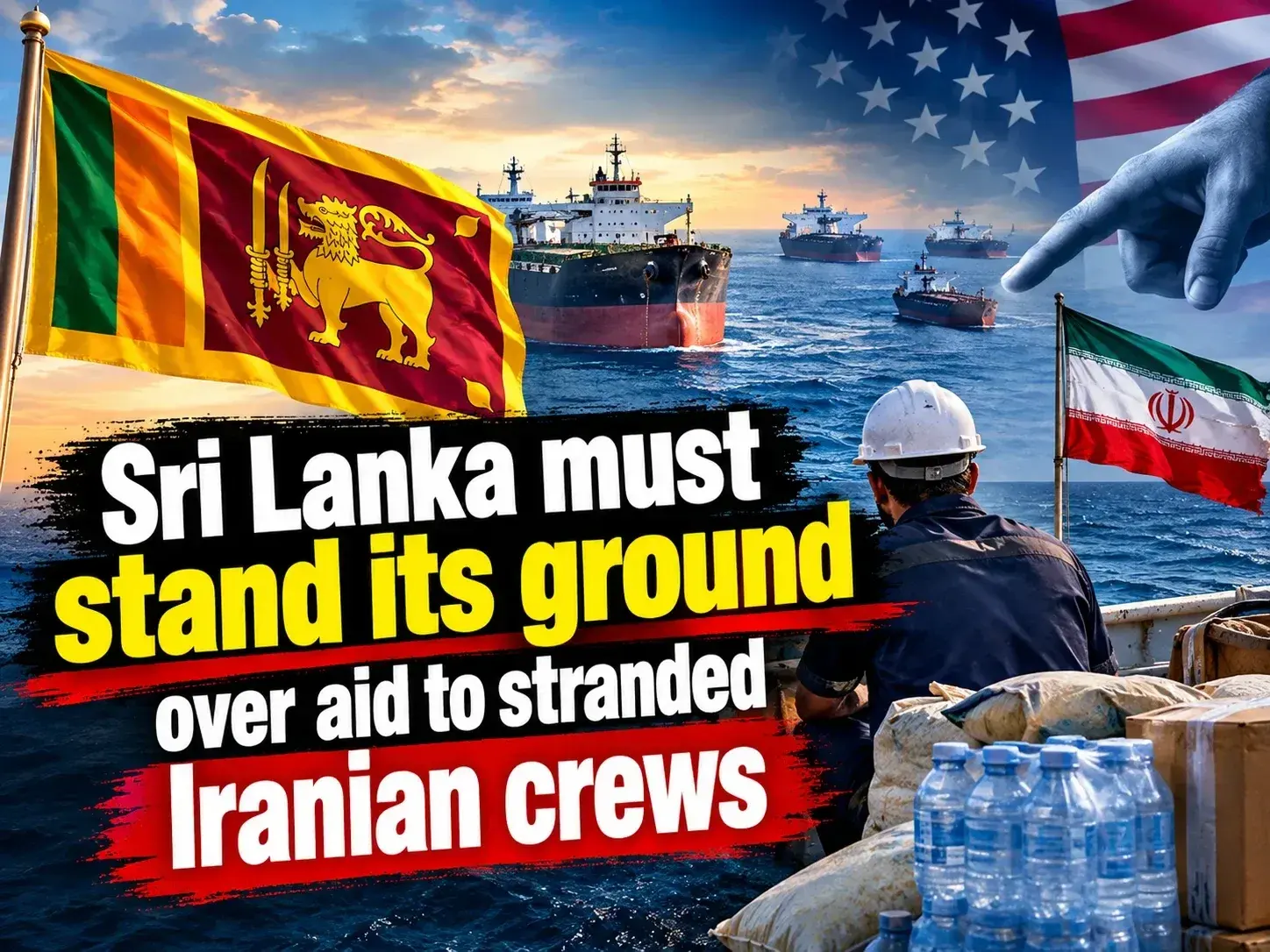
On 30 September 2026, the Wall Street Journal reported that U.S. officials had told Sri Lanka to stop supplying Iranian tankers stranded off its coast. About 20 tankers were reportedly running short of food, fuel and fresh water. Washington warned suppliers that continuing deliveries could expose them to sanctions.
According to this writer’s investigations, the U.S. Embassy and visiting American civilian and military officials repeatedly pressed Colombo to withhold supplies. Some officials within Sri Lanka’s national security establishment oppose these demands and want the government to express its displeasure. The WSJ report brought those warnings to businesses and voters, further restricting the government’s room for manoeuvre.
Foreign Minister Vijitha Herath has distanced the government from private suppliers. He said authorities had identified 15 Iranian vessels among 47 foreign ships outside Sri Lanka’s territorial waters. Iran had requested essential supplies, but the government had provided nothing and did not intend to do so.
Herath described provisioning as private business and warned companies about possible U.S. secondary sanctions. Foreign Ministry spokesman Thushara Rodrigo said the sanctions applied globally. That explanation leaves Washington’s repeated pressure on Colombo unanswered.
Sri Lanka’s economic dependence explains the government’s caution. The Export Development Board’s first-half 2026 report puts the United States’ share of merchandise exports at approximately 22 per cent. The European Union accounts for 25.5 per cent, with Britain providing another substantial market. Disputes with Western governments could threaten livelihoods across the island.
That vulnerability gives Washington influence well beyond the suppliers concerned, particularly when public fear of sanctions exceeds the likely consequences for individual businesses.
Nevertheless, Colombo has announced no blanket prohibition on private deliveries. Some suppliers may suffer little practical damage from sanctions because they have limited exposure to American customers or financial services. The government should allow willing businesses to deliver essential provisions.
Accepting every American demand also carries costs. Allowing Washington to determine whether stranded crews receive drinking water would allow the US to influence Sri lanka’s future humanitarian path and its vital that Sri Lanka sometimes risk disagreement to preserve its independence.
Colombo has already acted to help Iranians despite American displeasure. After a U.S. submarine sank IRIS Dena off the island in March, Sri Lanka conducted the immediate rescue. It subsequently took custody of IRIS Bushehr, brought its sailors ashore and repatriated more than 230 Iranians.
New Delhi’s closer relationships with Washington and Israel leave Sri Lanka with less reason to expect support against American pressure. Colombo, meanwhile, has maintained a strong pro-Palestinian position and declined to sponsor a Bahrain-led Security Council resolution against Iran.
Sri Lanka cannot afford a reckless confrontation with Washington, but it must judge which risks it can bear. Fear of American pressure has already constrained its willingness to pursue Russian oil and nuclear energy agreements or certain Chinese investments. Those decisions impose economic costs and in this instance withholding food and water could cost lives.
The government should convey its objections to Washington and permit willing suppliers to assist the crews. It must explain the actual risks to the public and defend its decision to prevent a humanitarian emergency. Sri Lanka accepted a calculated risk when it rescued Iranian sailors in March. It should act again before hunger and thirst endanger lives. Dependence on Western markets cannot justify abandoning people at sea.
Share this story
RELATED NEWS
View all
Counterpoint Political Desk
Propaganda, accusations, conspiracy theories and internal problems
Oct 03, 2026
Counterpoint Political Desk
Row over a bill: When hope springs eternal amid uncertainty
Sep 26, 2026
Point of View
When an oil shock reaches Sri Lanka
Sep 22, 2026
Point of View
Week of constitutional fireworks expected in House
Sep 20, 2026