Latest News
2027 Budget: President sets out economic transformation agenda
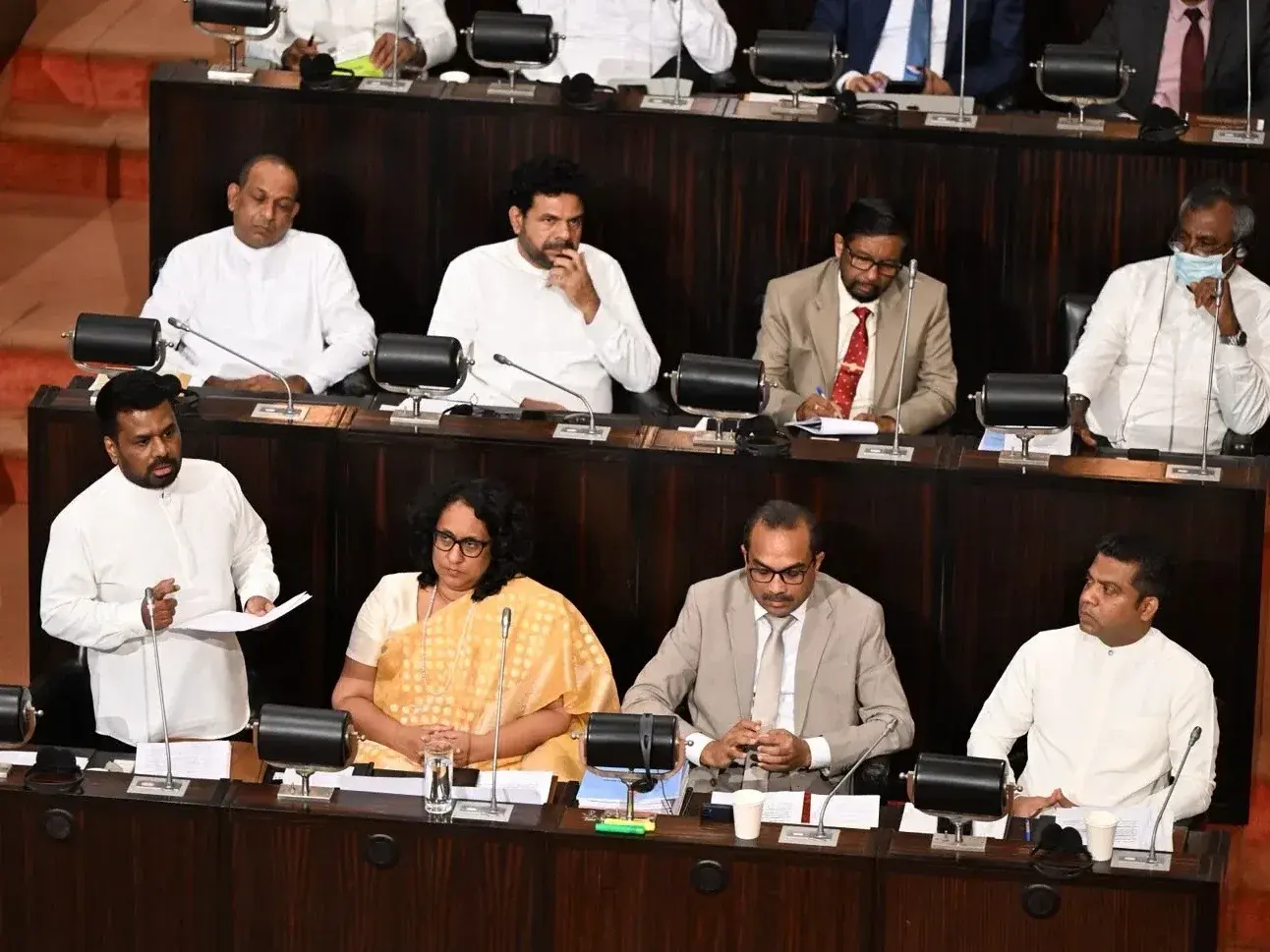
President Anura Kumara Dissanayake, in his capacity as Minister of Finance,on Thursday presented the 2027 Budget, setting out an economic programme focused on moving Sri Lanka from stabilisation to transformation while strengthening fiscal discipline, public institutions, energy security and the production economy.
Delivering the second reading of the Appropriation Bill for 2027 in Parliament from 1.40 p.m., President Dissanayake said the Government’s objective was to address the country’s immediate economic challenges while laying the foundation for a better future for the next generation.
He said Sri Lanka had successfully moved through the initial phase of economic stabilisation over the past two years despite numerous domestic and international challenges and was now entering the next stage of economic transformation.
The President said the 2027 Budget proposals were interconnected and formed part of a broader national programme aimed at strengthening the country’s production economy, maintaining fiscal stability and creating conditions for sustainable economic development.
President Dissanayake said the Government had appointed a committee to examine Sri Lanka’s future engagement with the International Monetary Fund (IMF) after the current IMF programme concludes in March 2027.
He said the Government was preparing for the next phase of its economic programme following the conclusion of the existing IMF arrangement.
Public debt is projected to decline to 87 per cent by 2032, exceeding the Government’s initial IMF-backed target of 95 per cent, he said.
The Government would continue reforms aimed at broadening the tax base, streamlining tax exemptions and digitising tax administration, while maintaining fiscal discipline and sustainable public finances.
The Government is targeting a primary budget surplus of 2.3 per cent and an overall budget deficit of 5 per cent.
The President said Government expenditure was expected to reach 13.6 per cent, while public investment was projected at 4 per cent of GDP.
He also stressed the need to continue implementing the Public Financial Management Act to strengthen fiscal accountability and improve the management of public resources.
President Dissanayake said the Government had the liquidity and financial capacity to meet its foreign debt servicing obligations over the next two years.
Sri Lanka serviced US$3.707 billion in foreign debt in 2025 and is required to pay US$3.591 billion in 2026. The requirement is expected to decline to US$2.986 billion in 2027 and increase to US$3.674 billion in 2028.
He said the lower debt servicing requirement over the next two years, compared with 2025 and 2026, would enable the Government to meet its obligations while continuing its economic recovery programme.
The President also called for a transformation of the public sector, saying Sri Lanka could not achieve its development objectives through the existing state machinery.
He said the country did not need an oversized state sector but an efficient public service capable of responding effectively to the needs of the people.
He said public sector reforms would focus on creating a stronger and more efficient administration capable of meeting the country’s future development requirements.
Recalling the mandate given to the Government by the public two years ago, President Dissanayake said people had expected it to build a better country and that the Budget had been formulated with that objective in mind.
A major component of the Budget is a series of measures aimed at strengthening energy security, improving fuel storage and distribution and supporting renewable energy.
The Government plans to expand fuel storage capacity to maintain supplies sufficient for 45 days.
An allocation of Rs.22.34 billion has been made for a project to construct a jet fuel pipeline from Muthurajawela to Bandaranaike International Airport and develop fuel storage facilities with a capacity of 92,000 metric tonnes.
The Government has also called for tenders for the Rs.16.332 billion Kolonnawa-Harbour Pipeline Project, which is expected to reduce fuel unloading time from 96 hours to 48 hours.
The project is scheduled to be completed within 18 months and is expected to reduce demurrage costs. The President said each day of delay currently costs the country around US$30,000 in payments to shipping companies.
The Budget also proposes providing free smart electricity meters to 300,000 consumers using more than 180 units of electricity a month.
All Ceylon Electricity Company (LECO) consumers using more than 120 units will also be provided with smart meters.
To encourage the use of battery storage with rooftop solar systems, households installing new rooftop solar systems will receive a subsidy of Rs.25,000 per kilowatt-hour of battery storage capacity, subject to a maximum of Rs.250,000 for systems with storage capacity of up to 10 kWh.
An allocation of Rs.3.5 billion has been proposed for the programme.
The Government will also remove the 10 per cent Port and Airport Development Levy (PAL) on imported batteries used for solar energy storage.
The measures are aimed at improving energy security, reducing inefficiencies in fuel distribution and facilitating the integration of renewable energy into the national electricity grid.
Addressing external economic pressures, President Dissanayake said the Government had faced the impact of rising global oil prices amid the ongoing conflict in the Middle East.
He said the Government had provided concessions amounting to Rs.147 billion to mitigate the impact of higher fuel prices on the public.
He also said the country had incurred an estimated US$3.4 billion in expenditure related to damage caused by Cyclone Ditwah and subsequent reconstruction efforts.
The President further warned of challenges expected from the anticipated impact of El Niño.
President Dissanayake said SriLankan Airlines had incurred cumulative losses of Rs.528 billion since former President Mahinda Rajapaksa ended its partnership with Emirates in 2008.
He said the Cabinet had appointed a special committee to examine options for reducing the debt burden of the national carrier and called on all Members of Parliament to support efforts to address the airline’s financial difficulties.
The President also expressed appreciation to Sri Lankan migrant workers, noting that foreign remittances were expected to exceed US$9 billion.
He said the contribution of migrant workers remained important to the country’s economic recovery and external financial stability.
The 2027 Budget is the third Budget of the NPP Government and the 81st Budget Speech of the country.
The Cabinet approved the 2027 Budget proposals yesterday before the President presented them to Parliament.
The Appropriation Bill for 2027 was presented for its first reading on October 7 by Deputy Minister of Finance and Planning Dr. Anil Jayantha Fernando.
The Second Reading debate will be held over seven days from November 13 to 20, with the vote scheduled for 6 p.m. on November 20.
The Committee Stage debate will then be held over 19 days from November 21 to December 14.
The vote on the Third Reading is scheduled for 6 p.m. on December 14.
Share this story
RELATED NEWS
View all