Current Affairs
INS Baaz in Car Nicobar signals India’s “Act East” ambitions, but local issues cry for attention
By P.K.Balachandran
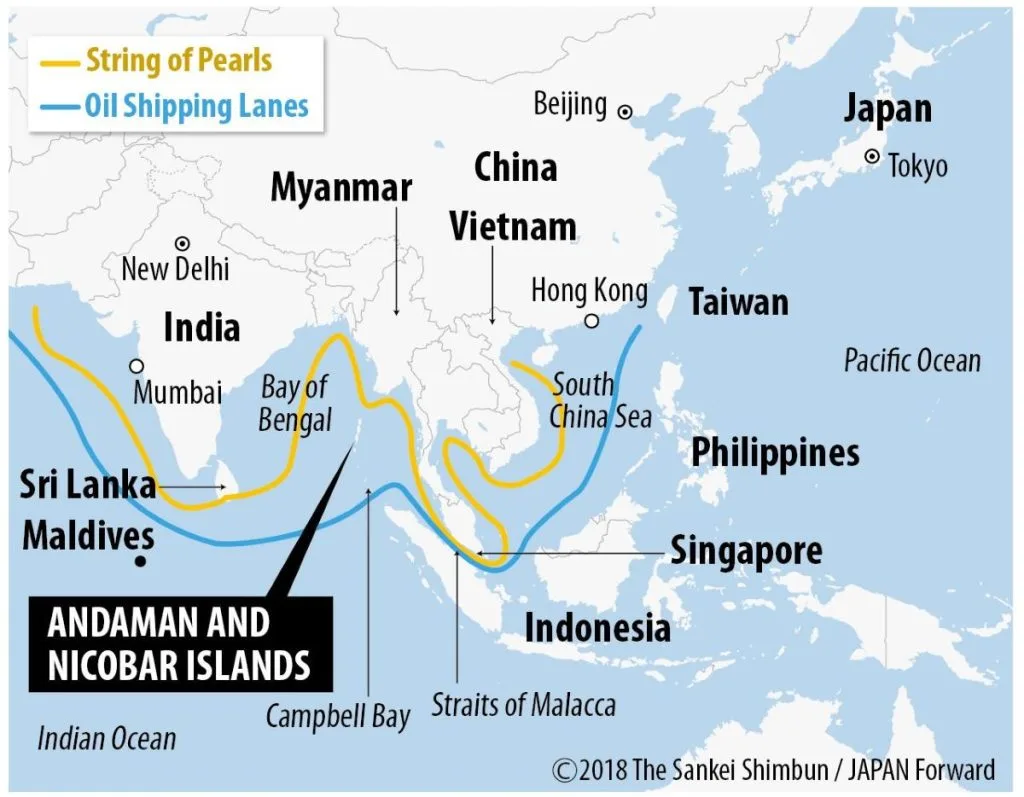
Colombo, May 9 – India is expanding an air and naval base in the Car Nicobar island that is considered essential for its security both in the Bay of Bengal and in the Indian Ocean further South. The central aim of this INR 72,000 crore (USD 7.6 billion) “INS Baaz” project is to strengthen India’s economic and strategic position in the Indian Ocean region as per its “Look East and Act East” policy.
The Car Nicobar Island, which is located 1,190 km from Chennai and 1,255 km from Kolkata, is about 1,200 km away from the Strait of Malacca. Nearly 60% of global maritime trade passes through the East-West sea lanes of the Indian Ocean and the Strait of Malacca is especially crucial, as a large portion of energy supplies to countries like China, Japan, and South Korea pass through it.
If India develops a modern port, airport, industrial zones, and logistics hubs here, it will not only boost its commercial standing. India will become a logistical powerhouse.
INS Baaz Details
INS Baaz was commissioned on July 31, 2012. The base initially had a 1,050-meter asphalt runway capable of accommodating Dornier 228 reconnaissance aircraft, helicopters, and Indian Air Force C-130J Super Hercules transport aircraft.
Phase 1 of the on-going project aims to extend the runway to 6,000 feet, enabling the operation of larger and more advanced maritime patrol aircraft. The ultimate goal is to expand it to 10,000 feet, capable of accommodating all aircraft classes, including heavy transport and fighter jets. like the Sukhoi 30MKI (armed with BrahMos missiles. The deployment of long-range maritime patrol aircraft from INS Baaz would significantly enhance India’s capacity for intelligence gathering, surveillance, and reconnaissance across vast areas of the Indian Ocean.
The integration of P-8I Neptune aircraft from INS Baaz significantly amplifies India’s maritime capabilities, providing advanced reconnaissance and combat capabilities. It can perform long-range, multi-mission maritime patrol, anti-submarine warfare (ASW), anti-surface warfare, intelligence, surveillance, and reconnaissance (ISR).
The P-81 Neptune is equipped with advanced sensors (including MAD for submarine detection) and armed with Harpoon Block-II anti-ship missiles and MK-54 lightweight anti-submarine warfare torpedoes. With an operating range exceeding 1,200 nautical miles, P-8Is provide comprehensive coverage and are effective for tracking surface vessels and submarines.
The base will have modern airfield Instruments and navigation aids, essential for all-weather, day-night operations and upgraded logistical infrastructure.
INS Kohassa (at Shibpur in the North Andamans) is also to be improved for the use of larger military aircraft and new ammunition dumps. The expanded bases will project India’s naval power, reinforcing its role as a net security provider and a responsible stakeholder in global maritime governance.
This strategy aligns with Prime Minister Narendra Modi’s “Atmanirbhar Indian Naval Aviation Technology Roadmap, 2047,” aiming for a 400-aircraft strong, indigenously developed, and network-centric Naval Air Arm.
Environmental Issues
INS Baaz expansion is part of a larger “Holistic Development of Great Nicobar Island” project, estimated at ?72,000 crore or over $ 7.62 billion, which faces significant challenges, particularly environmental.
The project requires diverting substantial forest land, potentially felling 1 million trees and clearing 244 sq km, threatening habitats and biodiversity. Concerns exist regarding the impact on the indigenous Shompen and Nicobarese tribals who are hunter-gatherers.
The region is prone to seismic activity, and critics argue the Environmental Impact Assessment (EIA) report downplayed risks of earthquakes and tsunamis. Accusations of incorrect or incomplete information and procedural failures in the draft EIA report have led to calls for review. The National Green Tribunal has ordered a review of the project’s environmental aspects, leading to delays. Activists have labelled the project an “ecocide” and urged for suspension of clearances.
The Nicobarese were forced to evacuate their villages during the Indian Ocean tsunami of 2004. This INS Baaz project will now permanently displace this community, ending its dream of returning to its ancestral villages.
In an article in “The Hindu” Congress party President Sonia Gandhi pointed out that the island’s Shompen Policy, notified by the Union Ministry of Tribal Affairs, specifically requires the authorities to prioritise the tribe’s welfare and integrity when considering large scale development proposals. Instead, the project de-notifies a significant part of the Shompen tribal reserve, destroys the forest ecosystems where the Shompen live, and will cause a large-scale influx of people and tourists on the island, she said.
Constitutional and statutory bodies set up to preserve tribal rights have been sidestepped throughout this process. As in Article 338-A of the Constitution, the Government should have consulted the National Commission for Scheduled Tribes. It has failed to do so, Gandhi said.
The Government should have consulted the Tribal Council of Great Nicobar and Little Nicobar Island. A Letter of “No Objection” was secured from the Council, but it has since been revoked, with the Council noting that the authorities had “rushed them” into signing the letter.
Due process and regulatory safeguards set up to protect local communities have been evaded. The Social Impact Assessment (SIA) conducted as per the Right to Fair Compensation and Transparency in Land Acquisition, Rehabilitation and Resettlement Act of 2013, should have considered the Nicobarese and Shompen as stakeholders of the process and evaluated the project’s impact on them. Instead, it omits any reference to them altogether.
The Forest Rights Act (2006), which empowers the Shompen as the authority to protect, preserve, regulate and manage the forests, should have underpinned any policy action. Instead, the Shompen have not been consulted on this issue — a fact which the Tribal Council has now confirmed
The Ministry of Environment, Forests, and Climate Change estimates that 8.5 lakh trees may be cut. This is a depressing figure, but it may also be a gross underestimate — independent estimates have suggested that 32 lakh trees to 58 lakh trees may eventually be cut, Gandhi said.
Compensatory Afforestation in Haryana
The Government’s solution to this indiscriminate tree felling is that of ‘compensatory afforestation’, a rather poor substitute for the loss of natural, old-growth forests. Inexplicably, the planned afforestation is in Haryana, a State that is thousands of kilometres away, and in a decidedly different ecology. In a tragedy bordering on farce, a quarter of this land planned for afforestation has now been auctioned off by the Haryana Government for mining, Sonia Gandhi pointed out.
Calcutta High Court Admit Petition Challenging Project
The Calcutta High Court subsequently held that a Public Interest Litigation (PIL) challenging alleged violations of the Forest Rights Act in connection with the Great Nicobar infrastructure project was maintainable, rejecting the Union Government's objection that the petitioner lacked locus standi because she is a resident of Hyderabad and not of the Andaman & Nicobar Islands.
A Division Bench of Chief Justice Sujoy Paul and Justice Partha Sarathi Sen observed that there could be “no thumb rule” regarding locus standi in PILs and that courts must permit genuine public causes concerning vulnerable communities to be raised even by persons not directly affected, Live Law reported.
END
RELATED NEWS
View all
Current Affairs
The place of workers’ remittances in the global and Sri Lanka context
Jun 15, 2026
Current Affairs
Roots of unrest in Pakistan-held Kashmir and Gilgit-Baltistan
Jun 14, 2026
Current Affairs
India gives up Car Nicobar airbase expansion on environmental grounds, but concerns remain.
Jun 13, 2026
Current Affairs
Sri Lanka’s joining the RCEP - opportunities and challenges
Jun 09, 2026